Loading...
Serving El Centro, CA and surrounding areas. (760) 997-7010
Sliding slopes, leaning walls, and water pooling against your home are problems that get worse the longer you wait. We build retaining walls designed for El Centro's soil and heat.
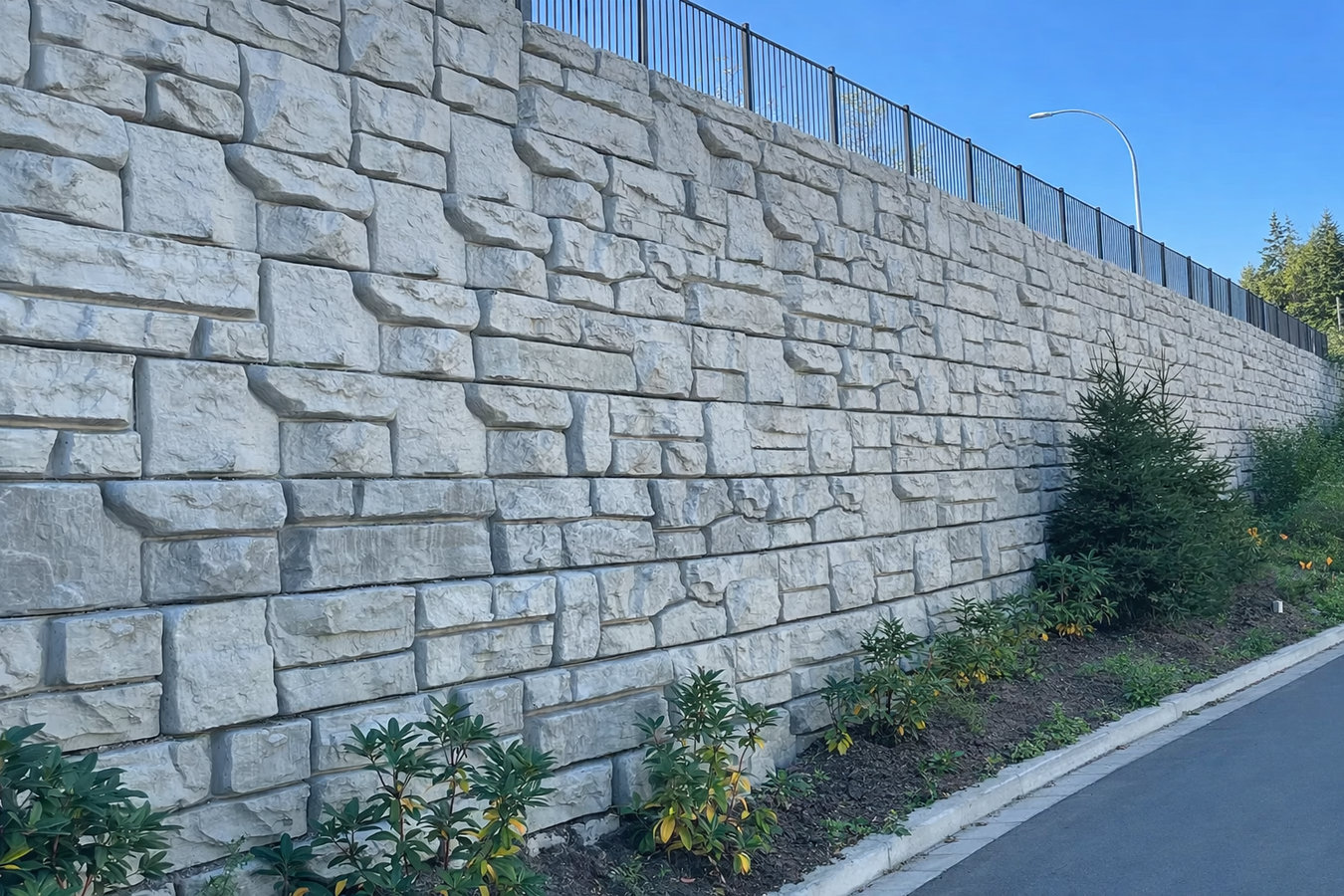
Concrete retaining walls in El Centro hold back soil that would otherwise slide, slump, or erode - most residential projects take two to five days once the crew is on site, and the finished wall creates level, usable space where you had an unstable slope.
If your yard has a slope that is hard to use, or if soil is slowly creeping toward your patio, fence, or foundation, a retaining wall stops that movement for good. El Centro homeowners deal with expansive clay soils that swell and shrink with every wet and dry cycle - a wall built without understanding that will show problems within a few years. We also build concrete floors and concrete footings for homeowners tackling larger projects at the same time.
Drainage is the part of a retaining wall most homeowners never think about - and it is the part that determines whether the wall lasts five years or fifty. We install proper gravel backfill and drainage pipe behind every wall we build, so water moves away instead of building up pressure that can topple even a well-built structure.
If you can see a section of your yard slowly creeping downhill - especially after rain or heavy irrigation - the soil needs to be held in place. In El Centro, this often shows up along raised planting bed edges or near slopes created during home grading. Left alone, sliding soil can eventually reach a patio, fence, or home foundation.
A retaining wall that is tilting forward or showing horizontal cracks near its base is under more pressure than it can handle. This is especially common with El Centro's clay-heavy soils, which swell and contract with moisture changes throughout the year. A leaning wall is not just an eyesore - it is a wall working toward failure.
When water has nowhere to drain, it collects against whatever is in its path. If you notice water sitting against your foundation, a fence post, or a garden border after watering or a storm, a retaining wall with built-in drainage can redirect that water before it causes damage. Standing water does serious long-term harm.
Many El Centro homes were built on lots graded with slopes that made sense for drainage but left the yard difficult to use. If a section is too steep to mow safely, too uneven for furniture, or just wasted space, a retaining wall can create a level terrace that turns the slope into usable outdoor living area.
We build poured concrete and concrete block retaining walls for residential properties across El Centro and the surrounding Imperial Valley. Whether you need a short garden wall to define a planting bed or a taller engineered wall to hold back a significant slope, the design process starts with the soil conditions and drainage on your specific property. For projects that involve regrading a larger area, we often coordinate with homeowners who are also adding a concrete floor to a covered patio or garage - both projects benefit from tackling grading and drainage at the same time.
For properties with significant elevation changes or where a new structure is being added near a slope, we can discuss concrete footings as part of the same project plan. Getting the underground work right the first time protects every structure built above it. We handle permits through the City of El Centro Building Division, explain the timeline before anything is scheduled, and stay on site through the city inspection.
Suits homeowners who want a clean, smooth finish and maximum strength for walls holding back significant soil loads.
Suits homeowners who want a textured appearance or need a wall built in sections without formwork.
Suits homeowners who want to define planting beds, create terraces, or add structure to a flat yard without a large excavation project.
Suits homeowners in areas with standing water, active irrigation, or clay soil that saturates quickly after rain.
El Centro sits on clay-heavy and silty desert soils that expand when wet and shrink when dry. That constant movement puts ongoing stress on any structure built into the ground. A wall designed for a milder climate - with a shallow footing and minimal drainage - will start to lean or crack within a few years here. The extreme summer heat, which regularly reaches 110 degrees Fahrenheit or higher, also means concrete has to be poured at the right time of day with the right mix. Contractors who schedule pours for early morning and use hot-weather admixtures produce walls that stay straight for decades. Those who cut those corners produce walls that crack before they cure.
El Centro is also surrounded by some of the most intensively irrigated farmland in the country, and that agricultural water use raises groundwater levels in residential neighborhoods throughout the year. Homeowners in Imperial and Holtville face the same conditions - soil that can go from bone dry to saturated in a short period, which is exactly the kind of moisture cycle that destroys poorly drained walls. For more information on how local soil and climate affect concrete construction, the Portland Cement Association publishes guidance on hot-weather concreting and drainage best practices.
We respond within one business day and schedule a free on-site visit. A retaining wall quote based only on a phone description is rarely accurate - we need to see the slope, the soil, and how water moves through the area.
After the site visit you receive a written estimate covering scope and cost. If your wall needs a city permit - generally required for walls with more than three feet of exposed face in El Centro - we explain the process and handle the application.
The first day on site involves digging a trench and pouring the footing. This is the noisiest part. Equipment may cross your lawn or driveway to reach the work area. Once the footing sets, the wall goes up quickly.
As the wall rises, gravel backfill and a perforated drain pipe go in behind it - this step is not optional. After backfill and cleanup, we schedule the city inspection if a permit was required and walk you through care instructions before we leave.
No phone guesses. We visit your yard, look at the actual conditions, and give you a written number - no obligation.
(760) 997-7010El Centro's clay-heavy soils swell and shrink with every wet and dry cycle, putting stress on any wall that was not designed for that movement. We size footings and drainage systems for local soil conditions specifically, not for a generic California site.
Navigating the City of El Centro's building permit process is something most homeowners have never done. We handle the application, track where things stand, and are present for the city inspection - so you never have to make a single call to the building department.
Poor drainage is the number-one reason retaining walls fail, yet some contractors skip it to save time. We install gravel backfill and a perforated drain pipe behind every wall we build because a wall without drainage in El Centro's irrigation-heavy environment will not last. The American Concrete Institute recommends drainage as a standard practice for all retaining walls.
One of the most common contractor complaints is a low price upfront and a much higher bill at the end. You get a written, itemized estimate before anyone picks up a shovel - and a clear explanation of what happens if unexpected soil conditions are discovered during excavation.
Every one of these proof points comes back to the same thing: a wall that stays straight and solid for decades, not one that looks fine on day one and fails within a few years. That is what we build, and it is why we ask about your soil conditions and drainage before we talk about price.
New concrete floors for garages, patios, and interior additions - poured with the same attention to ground prep that makes our walls last.
Learn MoreConcrete footings for structures, walls, and additions built on El Centro's expansive desert soils.
Learn MoreSpring and fall are the best seasons to pour concrete in El Centro - contact us today and lock in your project date before conditions change.